
Brisbane · A field guide
Why your Queenslander whistles in winter.
A plain-English guide to what's happening when your old timber house starts talking back — and what you can do about it tonight.
The first proper southerly hits Brisbane around the second week of June. The temperature drops, the air dries out, and the house starts making noises it didn't make in February. A door that closed sweetly all summer suddenly won't latch. A sash window you'd forgotten about starts rattling every time the wind comes up off the river. There's a cold draught running across the lounge-room floor that wasn't there last week.
None of this is a fault. It's your house doing exactly what it was built to do — and once you know what's going on, most of it is straightforward to live with or fix.
Why this happens to Brisbane timber homes
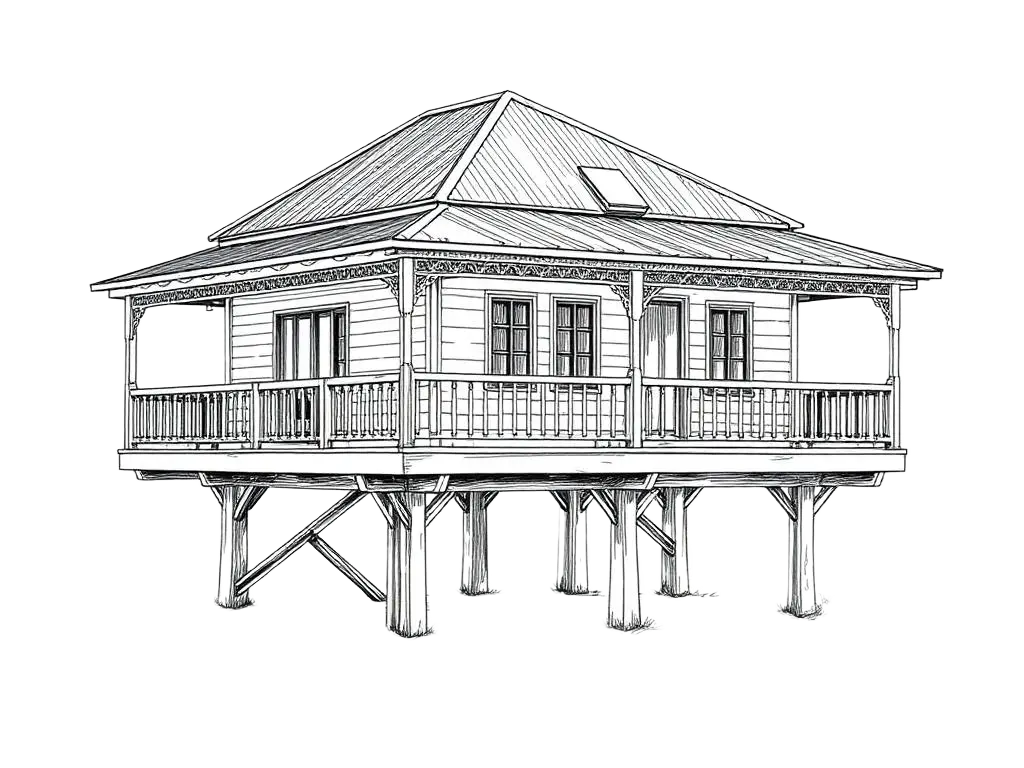
Queenslanders were designed for the summer. Single-skin VJ walls, raised on stumps, deep eaves, casement and double-hung sashes that throw open to catch a breeze. The whole thing is built to breathe. The breathability you're grateful for in February is the same breathability you feel as a draught in June.
Timber is also hygroscopic — a word that just means it takes on and gives up moisture from the air around it. In our dry winter air, the timber in your doors, windows, skirtings and floorboards shrinks. Shrinkage opens gaps. Gaps let cold air through, and they let timber components rattle that used to sit snug. Come the February humidity, that same timber swells, and the door that wouldn't close in October now won't open in March.
Brisbane's particular climate swing — humid summers, dry early winters, then a wet patch in late winter — is genuinely harder on timber joinery than a colder, more stable city would be. Your house isn't broken. It's moving with the weather, the way it was built to.
Five things you're probably noticing right now
A draught under (or around) an external door
- What's actually happening
- The door stop seal has perished, or the door has shrunk back from the jamb. In older homes there often was never a seal in the first place.
- Why it matters
- An unsealed external door is the single biggest heat leak in most Brisbane houses. It's also the easiest one to fix properly.
- The proper fix
- Self-adhesive EPDM rubber seal on the door stop, plus a brush or rubber seal at the bottom. A proper fix, not a band-aid.
Rattling double-hung sashes
- What's actually happening
- The parting bead (the thin timber strip between the two sashes) has shrunk or worn, so the sashes sit loose in their channels.
- Why it matters
- Rattle aside, a loose sash leaks air and lets the window slip down on its own. It's also the source of the classic Queenslander 'whistle'.
- The proper fix
- Replace the parting bead — a 20-minute job per window for a carpenter. A folded business card silences it tonight.
A door that suddenly won't close (or won't stay closed)
- What's actually happening
- Two possibilities, often both. The door has swollen from a damp snap and is fouling the jamb, or the hinge screws have worked loose so the door drops on its hinges.
- Why it matters
- A door that needs slamming wears the latch, splits the jamb, and stops being secure.
- The proper fix
- Tighten every hinge screw first — it's the cause more often than people think. Don't plane a swollen door in winter; it'll shrink back and leave a gap by October.
Whistling around window frames
- What's actually happening
- A small gap somewhere in the sash perimeter is acting like a flute when the wind hits it at the right angle.
- Why it matters
- Whistle means air. Air means heat loss and, more importantly, water getting in next time it rains sideways.
- The proper fix
- Find the gap (a candle flame held nearby will dance), seal with paintable acrylic gap filler or a thin foam strip on the sash.
Skirtings and cornices pulling away from the wall
- What's actually happening
- The wall framing and the plaster (or VJ) lining are moving at slightly different rates as moisture levels change.
- Why it matters
- Usually cosmetic, but the gap behind a skirting can pull cold air straight off the underfloor space.
- The proper fix
- A bead of paintable acrylic gap filler along the join. Cheap, quick, and it flexes with future seasonal movement.
The Brisbane winter draught checklist
A walk-around checklist for a typical timber home. Tick things off as you go — it'll save automatically. Print it for the clipboard, or email yourself a copy.
0 / 22 ticked
Brisbane Winter Draught Checklist — JGB Construction
External doors
Windows
Walls & penetrations
Floors & skirtings
Roof & ceiling
If you can't call a chippy tonight — here's what to actually do
Honest, do-it-this-weekend fixes. Each one tells you what it costs, how long it takes, and whether it's a real fix or a winter band-aid.
Draught under an external door
~$15 · 10 minutes per door
Real fix · lasts ~5 years
Self-adhesive EPDM rubber seal (from any hardware shop) stuck along the door stop on the top and both sides. Add a brush or rubber strip across the bottom if the threshold is the problem. Door snake or a rolled towel works for tonight.
Rattling sash window
Free · 60 seconds
Winter band-aid
Fold a business card in quarters and wedge it behind the parting bead. Silences the rattle immediately. The proper fix is a new parting bead — a small job for a carpenter once the weather settles.
Whistling window
Free · 2 minutes
Lasts a few weeks
Run a stick of beeswax or a plain household candle along the sash channels. Lubricates the sliding faces and partially seals the gap that's whistling.
Sticking door from swelling
Free · 5 minutes
Real fix (often)
Open the door, get a screwdriver, and tighten every hinge screw firmly. A door that has dropped 2 mm on its hinges fouls the jamb in exactly the same way as a swollen door — and it's the cause more often than people think. If it still catches, mark the high spot with chalk and live with it until spring; planing a swollen door leaves a gap once it shrinks back.
Cold draught from a skirting
~$8 · 30 minutes per room
Real fix
A bead of paintable acrylic gap filler (e.g. Selleys No More Gaps) run along the join between skirting and floor. Smooth with a wet finger, paint to match later. Stops the underfloor draught dead.
Old aircon hole or unused vent
~$10 · 15 minutes
Real fix
Cut a piece of closed-cell foam to fit, push it in firmly, tape over the inside face. Paint or cap later. Stops a surprising amount of wind getting through.
Manhole cover dropping cold air
~$12 · 5 minutes
Real fix
A strip of self-adhesive draught seal around the rebate the cover sits in. Costs nothing, takes no time, makes a noticeable difference — the ceiling cavity in most Queenslanders is the same temperature as outside.
When it's DIY, when it's worth a tradie
Do it yourself
- — Door seals and bottom brushes
- — Acrylic gap filler around skirtings and architraves
- — Tightening hinge screws
- — Wedging a rattling sash
- — Sealing old vent and aircon penetrations
- — Draught-sealing the manhole cover
Worth a carpenter
- — Planing a swollen door true (once it's dry again)
- — Re-cording or re-balancing sash windows
- — Replacing parting beads and sash stops
- — Refitting architraves on century-old VJ without splitting it
- — Reputtying glass or replacing a rotted sill
- — Anything structural, or where you can see daylight you shouldn't
If you'd rather just have it sorted
We're a Brisbane south-side carpentry business that fixes this kind of thing every week — draught-sealing, sash repairs, swollen doors, rotten sills, the lot. If your house is doing one or two things on this list and you'd rather not spend the weekend on it, get in touch. No pressure either way — we hope the guide alone is useful.
Found this useful?
Pass it on. If you manage rental properties, your tenants will thank you.